Designing a Smart Mirror for Postpartum Body Image
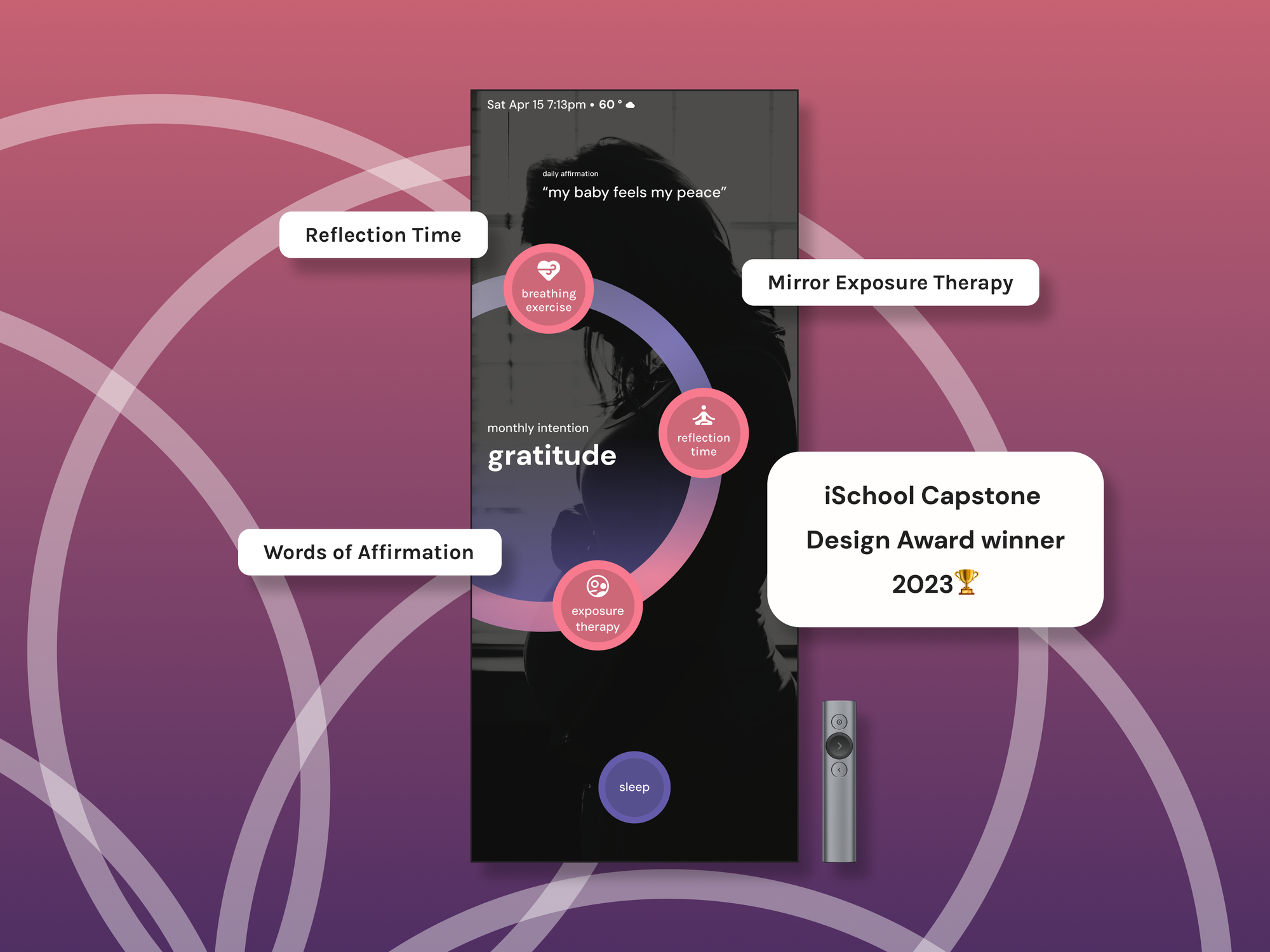
A full-body smart mirror that helps pregnant and postpartum women build a healthier relationship with their bodies. 🥇 Design Award Winner, 2023 iSchool Capstone.
Impact
About the project
Reflect was my HCI iSchool capstone, a project my team ran end to end, from problem to working prototype, inside an agile process where we each owned a role. I was one of two product designers, and together we researched, designed, and built the product.
The premise: dissatisfaction with one's body is common, and it intensifies during pregnancy and the postpartum period. We built Reflect, a smart mirror that turns a daily, ordinary moment, looking in the mirror, into a small act of wellbeing. It blends daily check-ins, intention setting, breathing exercises, reflection prompts, and clinically grounded mirror exposure therapy to help users slow down and develop a kinder relationship with themselves.
The work won the Design Award at our 2023 Capstone Night.
The problem
We started capstone with no project and one shared goal: make something that matters. As we traded the issues we cared about, body image kept surfacing, and the numbers made it impossible to ignore.
46%
Felt anxious or depressed because of concerns about their body image
27%
Reported increased body-image worries driven by social media
40%
Said pregnancy or birth made them self-conscious about their body
The deeper we looked, the clearer it got: this was widespread, under-discussed, and largely unaddressed by the products people actually have at home.
Discovering mirror exposure therapy
Our research led us to a clinical practice most people have never heard of: mirror exposure therapy.
It's a cognitive-behavioral technique for body dysmorphia. Users gradually increase time spent observing their reflection to confront negative body-image perceptions and reduce avoidance, while a guided process helps them challenge distorted thoughts and build more realistic, positive self-perceptions. Coping techniques like deep breathing and mindfulness manage anxiety during exposure.
The Target "Skinny Mirror" phenomenon. It's a universal experience for college-aged girls to buy that cute, $15 Target mirror, completely unaware that its slight warp distorts their reflection to look longer and leaner. I owned one of those mirrors myself. It created a false reality that deeply warped my self-perception and fueled my struggle with body dysmorphia.
It works, but it lives almost entirely inside therapy rooms, and the normalization of body dysmorphia keeps people from seeking it out. That gap became our opportunity: bring a proven practice into the home, in a form people would actually use every day.
Who we designed for
We focused on the people most disproportionately affected by negative body image during a specific life stage.
70%
Of pregnant women express anxiety about gaining too much weight during pregnancy
80%
Of pregnant women experience some level of body dissatisfaction
73%
Of pregnant women experience a decline in self-esteem during pregnancy
Supporting body image during this period isn't cosmetic. It's tied to emotional well-being, mental health, maternal health, and bonding with the baby.
To represent our audience we built two user types, pregnant women and postpartum women, rather than fixed personas, because user types gave us the simplicity, flexibility, and scalability to serve a broad population. They were grounded in real conversations: we interviewed our own mothers and a friend who was pregnant at the time, and the types kept evolving as our understanding deepened. Shared wants centered on self-care, support, alone time, and organization; shared pain points included limited mobility, body change, morning sickness, anxiety, and a desire for community and better body perception.
Research
We ran an extensive literature review to understand how mirror exposure therapy works, what our users actually need, and how to combine technology with mindfulness ethically. Four takeaways shaped the product:
- Pregnant women tend to prefer non-pharmacological approaches to treating anxiety.
- Mindfulness-integrated CBT can significantly reduce depression and anxiety during pregnancy.
- Maternal stress carries real consequences for children, including lower grey-matter density and behavioral and emotional problems.
- Nearly every society manufactures beauty ideals that are effectively impossible to meet.
We then scanned what already exists to support body image and mindfulness: self-help books, apps, fitness mirrors. The global smart mirror market was valued at $514.6M in 2022.
The gap was clear: nothing seamlessly combined mindfulness and mirror exposure therapy inside the comfort of someone's own home. That's the space Reflect was built to own.
Designing the interaction
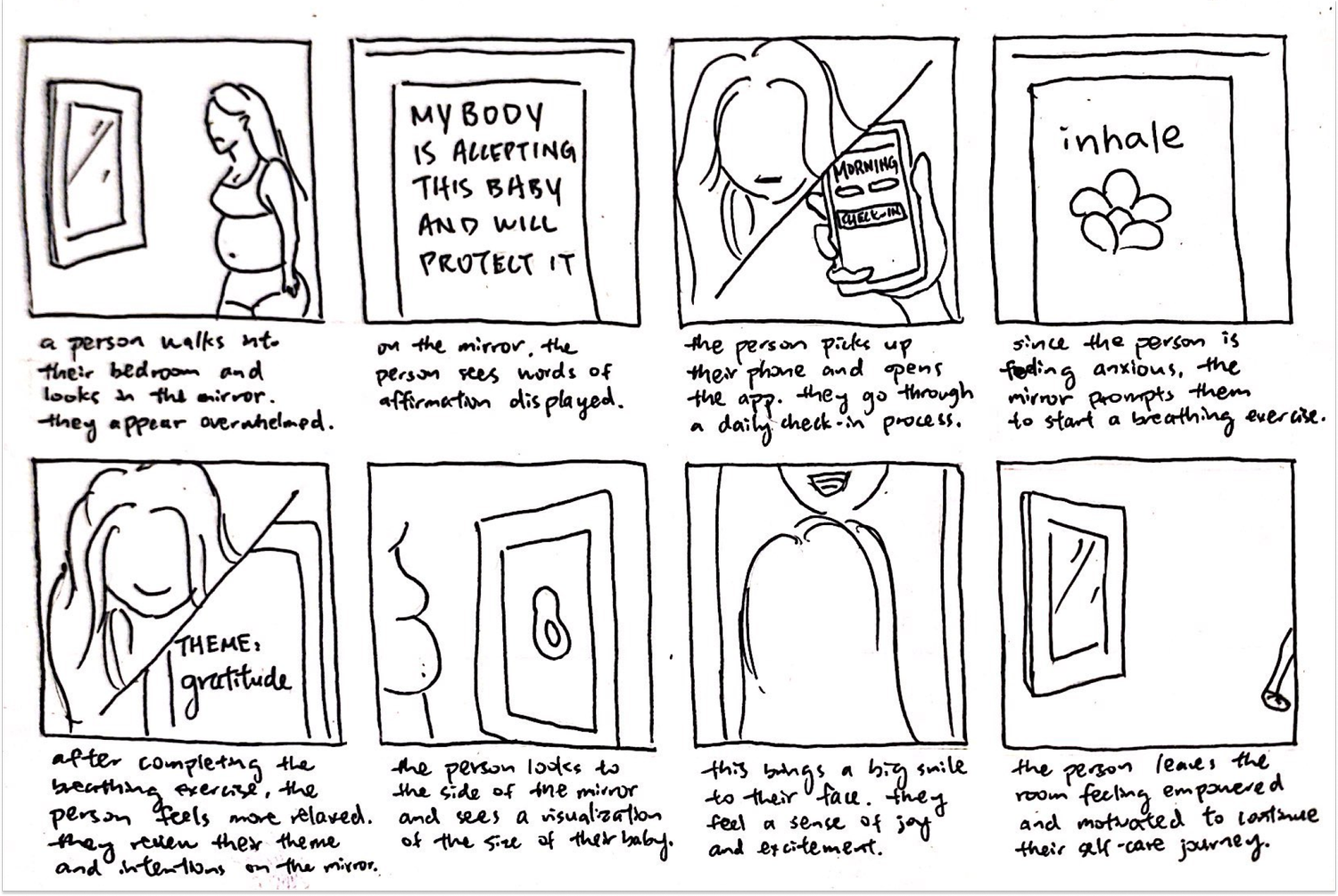
To align our professor, peers, and team on a shared vision, we storyboarded the experience step by step, mapping exactly how someone would move through a session.
The hardest design question wasn't visual. It was: how should a person interact with a mirror? We weighed three models:
Voice (Alexa)
Natural and hands-free, but after user validation we put safety and privacy first, and Amazon/Alexa's reputation on those fronts gave us pause.
Touchscreen
Direct and tactile, but it forces users right up against the glass and isn't always accessible.
Remote control
Convenient when the mirror is mounted out of reach or a user prefers a physical device.
We went with a touchscreen, the most direct, reliable way to guide someone through a timed, step-by-step session, with no privacy trade-offs.
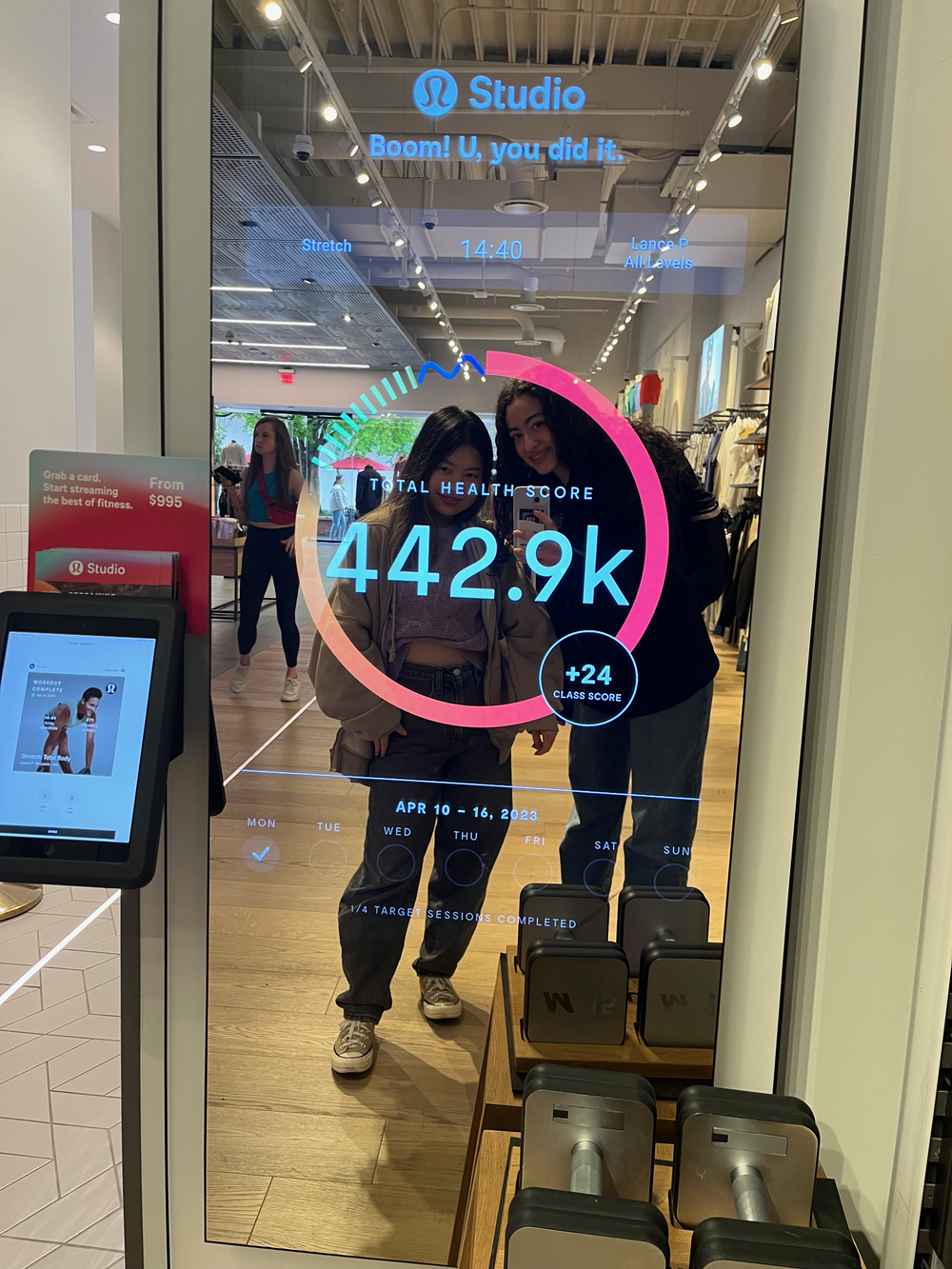
Field research at Lululemon
To understand smart-mirror behavior firsthand, we went to Lululemon to try theirs in person, testing colors, interactions, and the overall design language. It directly shaped our UI decisions:
- White text is easiest to read over a mirror reflection.
- Bright colors pop most against the reflection.
- People read a mirror top to bottom, so hierarchy should be vertical.
- A word-forward design language reads better than icons.
From prototype to testing
We built our first high-fidelity prototype, then put it in front of users. Four findings reshaped it:
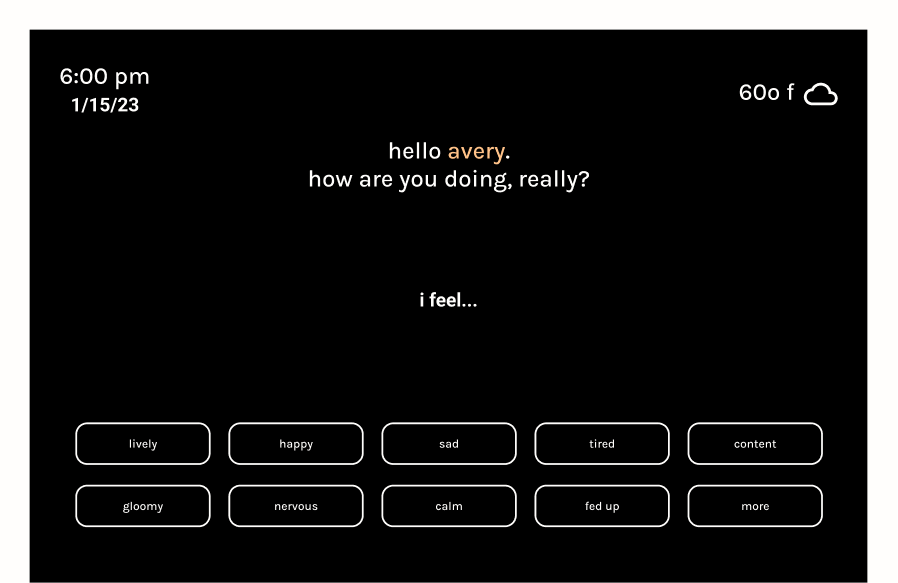
Better explanation. Users were often unsure what each feature was for, so we made the purpose of every feature explicit.
Timed sessions. Users rushed through prompts, so we added a timer to slow the experience down.
Full-length mirror. Users couldn't see their whole body, which is essential for the therapy, so we moved to full length.
No glassmorphism. The style didn't hold up against real mirror technology, so we dropped it.
The product
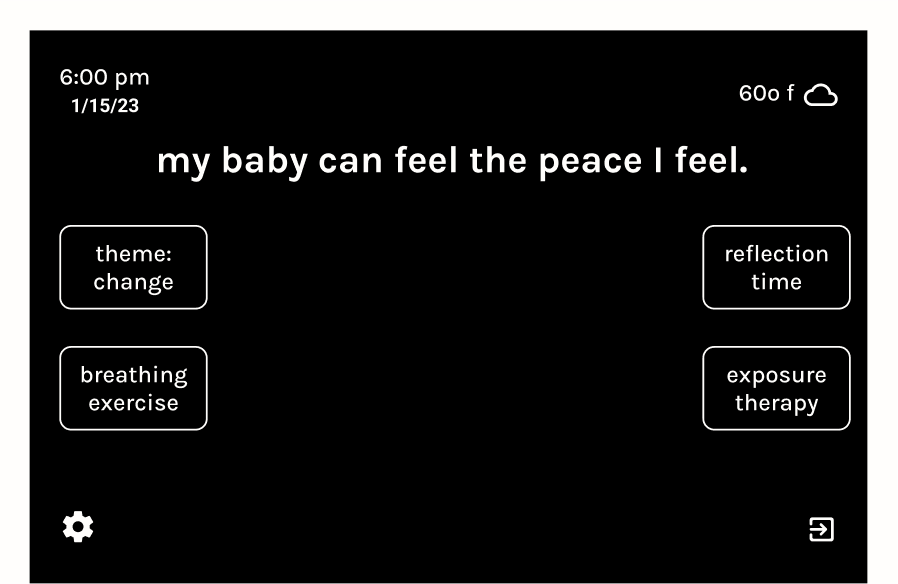
We codified everything into a design style guide and system, then built Reflect around five core features:
Breathing exercise
A guiding flower leads you through square breathing: slow, deep breaths for anxiety relief, meditation, and stress reduction.
Reflection time
Thoughtful daily prompts build self-awareness, strengthen relationships, and support personal growth.
Monthly intention
Set monthly goals as a roadmap for growth, staying on track while adapting to change.
Mirror exposure therapy
Clinically proven, step-by-step guidance to build a better relationship with your body.
Words of affirmation
On-screen affirmations to boost self-esteem and a positive mindset.
View the Figma prototype →
Watch the video demo →
Recognition from iSchool judges and professors affirmed the dedication and innovation behind Reflect, and made it the project I'm proudest of.
What I learned
Every instinct I had as a designer said to reduce friction. Reflect is the one product I've worked on where the friction was the point. When testing showed people racing through the prompts, the fix wasn't a smoother flow, it was a timer that refused to let them move on. Mirror exposure therapy only works if you stay with the discomfort, so the interface's job was to slow someone down rather than get out of their way.
That reframed how I thought about the whole product. We weren't adding a feature to a mirror. We were taking a clinical practice out of a therapist's office and putting it in someone's bedroom, during a vulnerable stretch of their life. It's why we turned down voice control even though it was the most natural way to interact: a mirror that listens is a very different object in a bedroom than a mirror that waits. Choosing the less elegant input was the right call.
What I carry from Reflect is the habit of asking what a design is doing to someone, not just whether they can finish the task.
Next steps
If we took Reflect further, we'd:
- Add progress analysis so users can see their journey over time
- Expand the product scope
- Run more usability testing
- Improve the efficiency of the program
- Add more features